


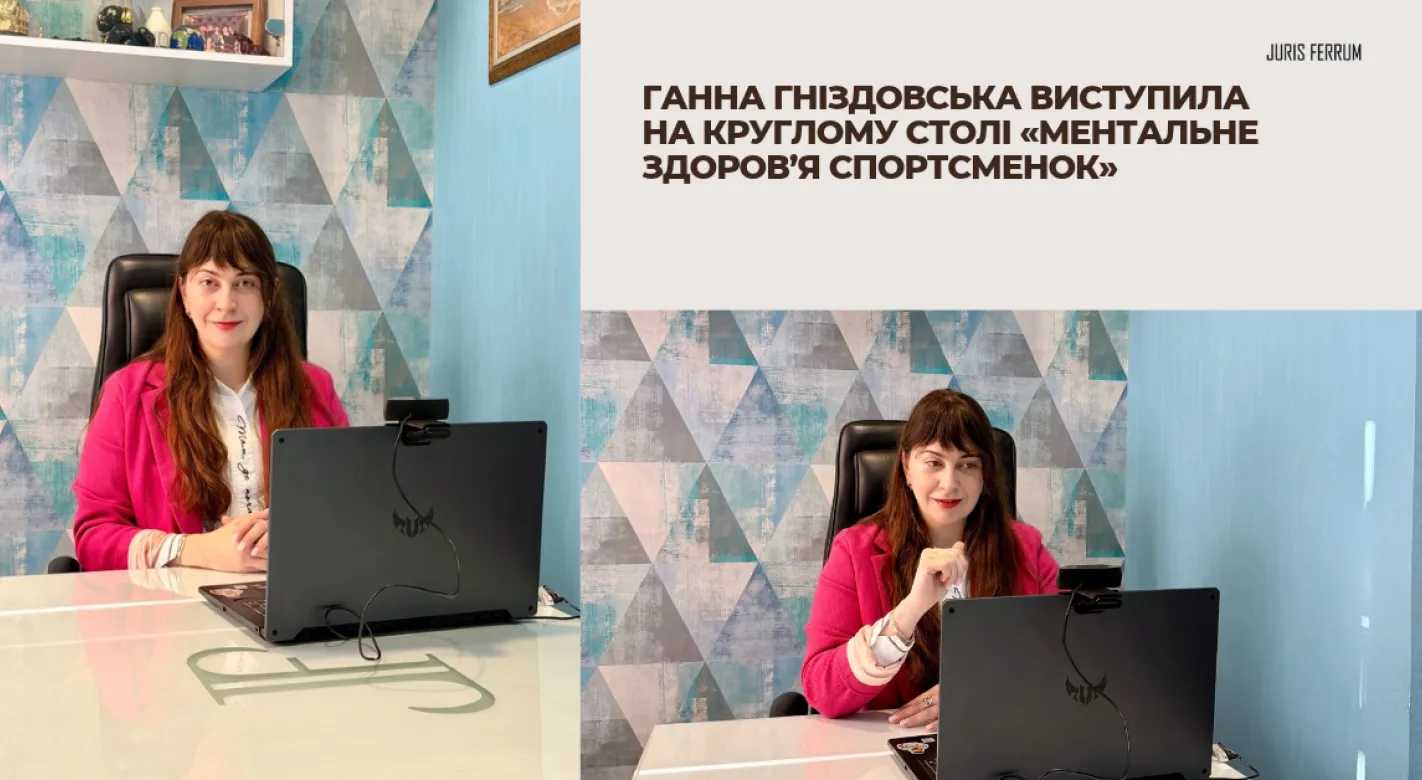
The event was organised by the All-Ukrainian Trade Union “Football of Ukraine” and the All-Ukrainian Association of Professional Footballers, together with the UAF Women’s and Girls’ Football Committee and with the support of the Federation of Trade Unions of Ukraine. The round table was held as part of a Ukrainian-Swedish project supported by Union to Union.
🎤 Ganna Gnizdovska, Managing Partner of Juris Ferrum Law Firm, attorney, PhD in Law, Deputy Chair of the NADC Anti-Doping Appeals Commission, and member of the UAF Dispute Resolution Chamber, delivered a presentation entitled “Addressing the Effects of Stress and the End of a Sporting Career”.
At first glance, once an athlete ends her career, it may seem that she can finally take a break from training, competitions, and constant pressure. But is it really that simple? 🙂
During her presentation, Ganna shared findings from relevant research and international experience in supporting athletes both during and after their sporting careers.
🔹 Life after sport. 70% of former professional footballers surveyed in Australia described the transition to life after sport as difficult or very difficult. And 56% had not even planned what they would do after ending their careers.
🔹 Anti-doping and stress. A period of ineligibility has ended — but does that mean all the problems are over? Unfortunately, no. Reputational consequences, loss of contracts, and difficulties returning to sport may persist long afterwards.
🔹 International experience. Australia and the United Kingdom already have programmes that support athletes during anti-doping proceedings and after the end of their sporting careers. The International Olympic Committee also helps athletes prepare for new professions and even start their own businesses.
🔹 Legal protection. We discussed how sports contracts and collective agreements can provide guarantees of psychological support, rehabilitation, and assistance following the end of an athlete’s career.
A separate issue is the role of sports organisations and trade unions. Support for athletes should not be limited to the duration of their contracts or their participation in competitions. It is important that they have access to psychological support, receive the information they need about their rights, and can rely on assistance during periods of injury, anti-doping proceedings, or career transition.
And what can be done from a legal perspective? First and foremost, these matters should not be left entirely to the discretion of clubs or sports federations. Clear provisions in contracts, collective agreements, and internal regulations can help define what support an athlete is entitled to, who is responsible for providing it, and under what conditions. International experience also demonstrates that such mechanisms are worth developing in Ukrainian sport.
After all, every sporting career eventually comes to an end. Life, however, continues — and ideally, athletes should be prepared for that transition not only psychologically, but also financially and legally.
💙 We thank the organisers and all participants for such an engaging discussion!
Special thanks to the All-Ukrainian Trade Union “Football of Ukraine” for the invitation and for drawing attention to such important issues. It is encouraging that today we are talking not only about sporting results, but also about the people behind them.